

School field trips are moments filled with excitement, enthusiasm, and the joy of discovery. They awaken children’s natural curiosity and provide meaningful experiences that support learning, social interaction, and physical development. Every new environment becomes an opportunity to explore, ask questions, and gain a deeper understanding of the world around them.
In this article, we will explore why school field trips play such an important role in a child’s overall development.
GENERAL FACTS
1- Beyond the Classroom Walls
In today’s world, childhood obesity has become a significant concern that can affect children’s health, growth, and overall well-being. According to statistics published by the Centers for Disease Control and Prevention (CDC), approximately one in five children in the United States is affected by obesity.
Although the classroom provides an essential learning environment, it can sometimes feel highly structured and may not always satisfy children’s endless curiosity. Young learners naturally want to explore, observe, touch, question, and experience the world around them.
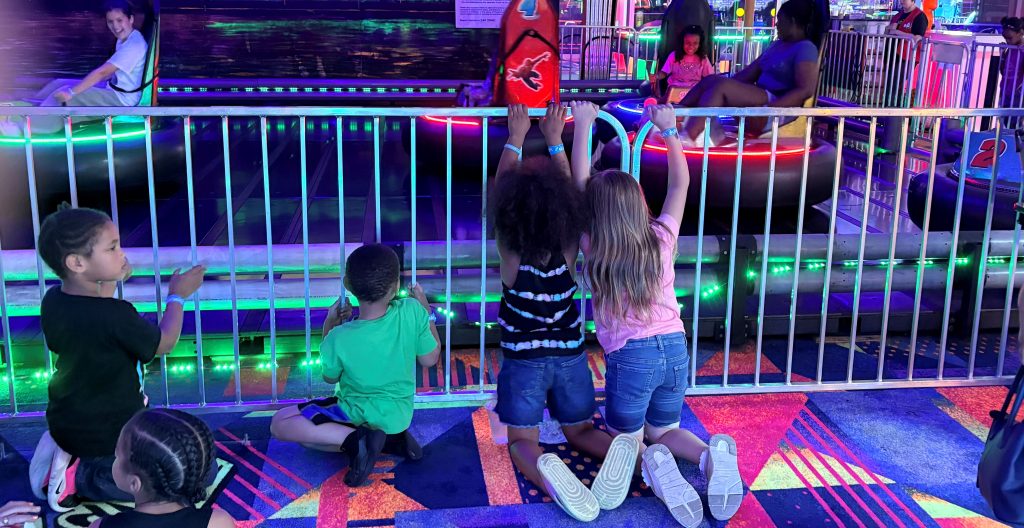
Children also possess an incredible reserve of energy. They are, in many ways, like little athletes whose bodies are designed to move, run, climb, jump, and play. Parks, gardens, nature trails, museums, farms, and other learning environments outside the classroom provide the perfect settings for children to channel that energy while learning through experience.
Field trips offer children the opportunity to move freely, engage their senses, and transform learning into something active rather than passive.
.
2- The Foundations Child Development
A child’s development rests on four essential pillars :
- Emotional security and social development
- Play and cognitive development
- Emotional intelligence through self-expression and communication
- Psychomotor development
Together, these four pillars form the foundation of every child’s growth and well-being.
Research consistently shows that exploration, understanding, and social interaction fulfill some of the most fundamental developmental needs of young children. Every opportunity to discover something new strengthens their confidence, expands their knowledge, and nurtures their natural desire to learn.
We know that
School field trips provide an ideal environment where all of these areas of development can grow simultaneously. Outside the classroom, children are encouraged to communicate with others, solve problems, make observations, ask questions, and build meaningful connections with both people and their surroundings.
Rather than simply receiving information, children become active participants in their own learning experience.
3- Children Don’t Play to Learn — They Learn Through Play
It is often difficult for adults to see the world through the eyes of a young child who knows very little about life. To them, almost everything is new. Their minds are in a constant search for understanding, knowledge, and discovery. Their endless curiosity is reflected in the questions that often leave us speechless:
Why doesn’t Grandpa run with me? Where does the wind come from? Do cars sleep in beds? I wish I could hold a star. / Who is Santa Claus’s wife ?…
And then comes the famous question : “Why?”… “Why?”… “Why?”… until you finally run out of answers !
Children are naturally open to everything around them. To them, the world is one great adventure waiting to be explored. They have an incredible desire to understand, discover, and make sense of everything they see.
At the beginning of life’s journey, they depend on the people around them to guide their discoveries.
But in reality…
Their Classroom Is the World
Every park, museum, library, nature trail, farm, zoo, community center, and neighborhood becomes an opportunity to learn.
Every conversation, every observation, every new experience helps shape the way children understand the world and their place within it.
This is why learning beyond the classroom offers children unique opportunities to experience education in ways that simply cannot be replicated indoors.
Rather than memorizing information, children engage with it. They observe, experiment, ask questions, solve problems, and create lasting memories. Learning becomes active, meaningful, and deeply connected to real life.
Play is not a break from learning.
PLAY IS LEARNING
.
BEFEFITS OF THE School Field Trips
School field trips possess a remarkable ability to break down barriers and build meaningful relationships. They create a different kind of connection between teachers and students, one built on shared experiences rather than classroom routines.
Beyond the classroom walls, children begin to see their teacher from a different perspective. Instead of being simply the person who leads the class, the teacher becomes a trusted guide, mentor, and encourager, someone who walks beside them as they discover new places, ask questions, and overcome challenges together.
This change in environment naturally creates an atmosphere of trust, security, and mutual respect.
Field trips also encourage children to express their imagination freely. Every new place invites them to invent, create, observe, question, and dream.
The true value of these experiences lies in living meaningful moments together, discovering the world from new perspectives, and learning new ways to communicate and cooperate.
Whether participating in a team sport, performing in a theater activity, visiting a science museum etc… , children learn that making mistakes is part of learning. They discover how to persevere, try again, adapt, and develop new strategies for success.
Every new accomplishment especially something a child once believed they could not do strengthens self-confidence and nurtures a healthy sense of self-worth.
These achievements also help create new neural pathways, allowing children to build upon previous experiences and approach future challenges with greater confidence and resilience.
.
conclusion
Sophie (six years) beautifully observed : Children are always alert. They keep their eyes wide open, almost like spiders
Children notice everything.
They observe details adults often overlook, absorb new experiences effortlessly, and constantly connect one discovery to another. Every outing becomes another opportunity to strengthen those connections.
This perfectly reflects what the Quebec National Institute of Public Health explains:
So ; In other words, no area of a child’s development grows in isolation.
Physical activity supports cognitive growth.
Language strengthens emotional expression.
Social interaction builds confidence.
Recognizing and respecting children’s developmental needs is the first step toward helping them grow into confident, curious, and well-rounded individuals.
Every child deserves opportunities to explore, move, imagine, discover, and build meaningful relationships with the world around them. These experiences are not simply enjoyable moments—they are essential building blocks for lifelong learning and healthy development.
At Spreading Childcare, we are committed to creating learning experiences that nurture every aspect of a child’s growth. We believe that education extends far beyond the classroom walls and that every field trip, every outdoor activity, and every new discovery contributes to a child’s intellectual, social, emotional, and physical development.
By embracing experiential learning, we help children develop confidence, curiosity, resilience, and a lifelong love of learning.
We encourage every parent, guardian, and educator to recognize the importance of these experiences and to actively support opportunities that allow children to explore the world around them.
…
When children get freedom to discover the world
THEY DISCOVER THEMSELVES